
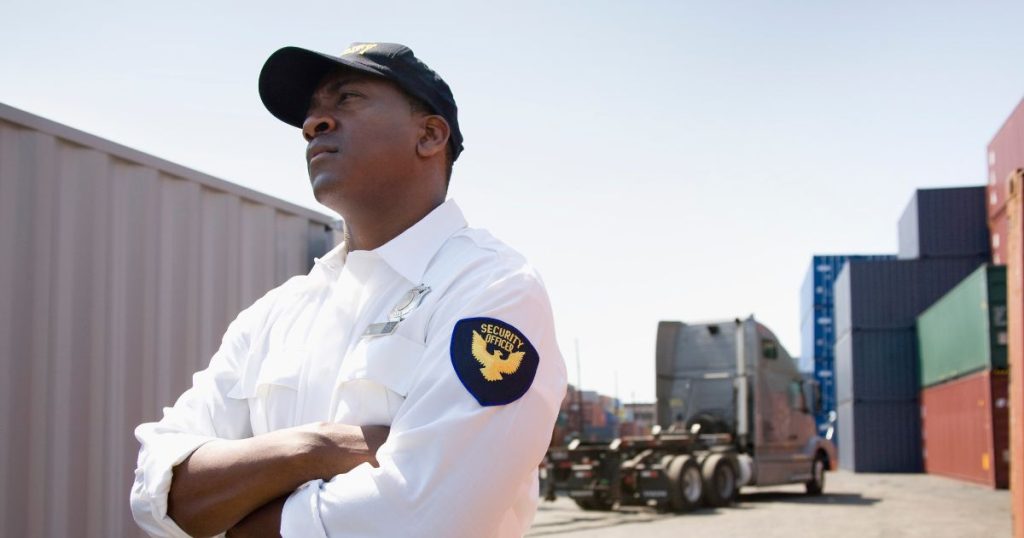
Your shipping and receiving schedule lives and dies by efficiency, and it all starts at the gate.
At distribution centers and warehouses across California, the guard shack is more than a checkpoint; it’s the frontline of your logistics operation. If things get backed up here, it creates a ripple effect that impacts inventory flow, customer satisfaction, and your bottom line.
Here’s how to improve guard shack performance to keep traffic flowing, cargo secure, and operations running like clockwork.
Why the Guard Shack Matters More Than You Think
Many businesses think of security officers solely as crime deterrents. But when positioned at a high-traffic logistics hub, your guard is also:
- The first point of contact for vendors, carriers, and contractors
- Responsible for verifying credentials and managing access
- A key player in enforcing safety protocols and traffic flow
- A frontline communicator for unexpected issues (delays, hazards, incidents)
In short: the guard shack is both a security post and a logistics control point. When staffed properly, it can significantly reduce operational friction.
Bottlenecks Start at the Gate
One of the biggest challenges in distribution is minimizing downtime. Bottlenecks at the entrance gate can delay:
- Incoming deliveries
- Outgoing shipments
- Shift changes and employee access
- Emergency response entry
These issues are magnified during peak shipping seasons or when working with a high volume of contractors. That’s why guard shack best practices for distribution centers are critical.
Best Practices to Maximize Efficiency and Security
1. Staff the Right Person, Not Just a Warm Body
As Lawrence Borgens of Delta Protective Services says: “The key is having the right person, in the right place, at the right time.”
The ideal guard shack officer is more than a gatekeeper. They must be observant, courteous under pressure, and tech-savvy enough to handle digital logs and access systems. Strong communication skills are non-negotiable.
We certify our officers as either Public or Non-Public guards, based on the visibility of the site and access to civilians.
- Public-facing guards are trained for environments with constant public interaction (like retail or open-access logistics parks).
- Non-public guards are assigned to closed or restricted environments with minimal visitor contact.
The distinction matters, especially when dealing with high-value goods or sensitive delivery protocols.
2. Use Digital Access Logs and Visitor Management Systems
Paper logs lead to human error and slowdowns. A digital system allows your guard to:
- Pre-approve visitors
- Log driver names and vehicle plates in real time
- Quickly generate reports for audits or incident reviews
This also helps ensure compliance with California access control and security requirements, which are increasingly rigorous for logistics companies.
3. Integrate With Your Logistics Software
Your guard shouldn’t be operating in a vacuum. When possible, integrate the security team with your scheduling or dock management system. This helps them:
- Know who’s expected and when
- Prepare for truck arrivals
- Avoid double-booking dock access
Even a shared dashboard view can make a major difference in entry coordination.
4. Train for Safety Protocols and Emergency Response
Beyond efficiency, your guard needs to know what to do when something goes wrong. This includes:
- Directing emergency vehicles to the proper entrance
- Enforcing PPE rules and speed limits on property
- Reporting spills, hazards, or unauthorized entries
A well-trained guard enhances safety and reduces liability—two areas where distribution centers are especially vulnerable.
For more insights on preventing warehouse risks, check out How to Conduct Your Own Business Security Assessment.
5. Optimize Physical Layout
Even the best-trained officer can’t overcome a poor setup. Ensure that:
- Guard shacks have clear sightlines and sufficient lighting
- Traffic lanes are marked and free of obstacles
- Signage is posted for truck drivers, contractors, and employees
- There’s adequate space for vehicle inspection and queueing
Strategic placement of cameras and bollards can add layers of deterrence and documentation without slowing things down.
Common Mistakes That Cause Costly Delays
Even well-intentioned facilities make these critical errors:
- Understaffing the gate during high-volume windows
- Assigning untrained or temporary guards without proper onboarding
- Failing to keep up with guard certifications and compliance standards
- Relying on outdated logging systems
- Not conducting regular traffic flow audits
Remember, if your guard shack becomes a chokepoint, it slows everything downstream—from warehouse productivity to delivery performance.
The Cost of Inefficiency
According to the National Association of Manufacturers, even minor delays in distribution can result in thousands in lost productivity per day. Add in the risk of theft, unauthorized access, or miscommunication, and the stakes rise even higher.
Protecting your distribution center isn’t just about perimeter fencing or cameras. It’s about efficient, accountable processes, and it all starts at the gate.
Final Thought: Good Security Is Good Logistics
At Delta Protective Services, we specialize in guard shack staffing that enhances both protection and performance. We vet, train, and place officers who understand the unique demands of industrial and distribution environments.
If you’re experiencing delays, recurring entry issues, or rising shrink, your first step is a security review. We’ll help you spot the cracks, fix the process, and put the right people at the gate.
Explore more about our courtesy patrol services and how we support large commercial sites throughout California.
Ready to Prevent Bottlenecks at Your Warehouse or Distribution Center?
Call us at (209) 547-2980
Request a custom security proposal