
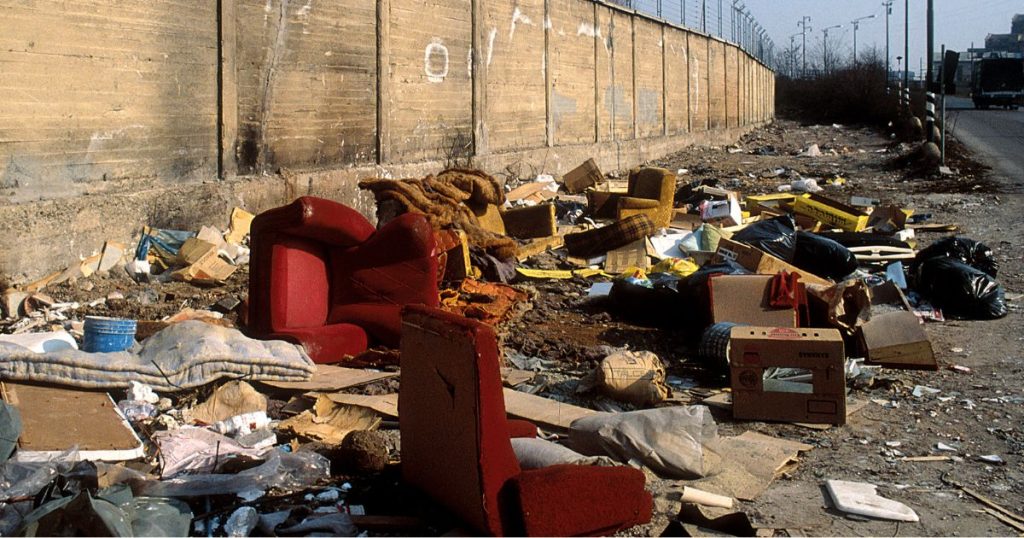
When most business owners think about illegal dumping, they think about cleanup costs, complaints, and the headache of hauling away someone else’s trash.
That is part of the problem, but it is not the whole problem.
Illegal dumping is also a security issue.
For business owners and property managers in Stockton, dumped mattresses, furniture, tires, bags of trash, and construction debris do more than make a property look bad. They create a chain reaction that can lead to loitering, trespassing, blocked visibility, and a property that appears unmanaged. That matters because properties that look ignored often attract more unwanted activity.
The City of Stockton’s Clean City Initiative exists for a reason. The city describes the program as a coordinated effort to reduce trash accumulation and illegal dumping across Stockton, working with Public Works, Stockton Police, waste partners, and community volunteers. That alone should tell business owners something important: this is not just a sanitation issue. It is a citywide quality-of-life and safety issue.
Why Illegal Dumping Becomes a Security Problem
Trash changes how a property functions.
Once debris starts piling up, several things happen fast.
First, visibility drops. Dumped furniture, stacked bags, broken appliances, and scattered debris create physical barriers that block sightlines for employees, customers, tenants, cameras, and patrol officers. If you cannot clearly see a side yard, fence line, alley, or dumpster enclosure, you have created a place where people can linger without being noticed.
Second, a neglected appearance sends the wrong message. When a lot, alley, or rear access road looks abandoned, people assume no one is watching. That perception can invite loitering, trespassing, scavenging, vandalism, and in some cases encampments. Security professionals see this pattern all the time. One unmanaged problem signals that other rules may not be enforced either.
Third, it can create safety and liability exposure. The U.S. Environmental Protection Agency states that illegal dumping can threaten public health, safety, property values, and quality of life. That is a broad statement, but for a commercial property owner it translates into very practical concerns: employees walking past hazards, customers questioning whether your site is safe, and additional exposure if someone is injured near dumped materials.
How Dumping Leads to More Than Complaints
One of the biggest mistakes property owners make is treating dumping as a one-time nuisance.
Someone leaves trash. You call someone to remove it. Problem solved.
But often, dumping is the beginning of a pattern, not the end of one.
A pile of debris can become:
- A hiding place near a fence line or rear alley
- A place where people stop to sort through discarded items
- A visual signal that the property is not regularly monitored
- A barrier that makes patrol checks and camera coverage less effective
- An anchor point for repeated dumping because offenders know they got away with it before
This is one reason crime prevention and environmental design experts emphasize visibility, maintenance, and clear control of outdoor spaces. Exterior areas should be designed and managed to discourage loitering and trespassing, including through signage, visibility, and reducing places where people can gather unnoticed. Illegal dumping works against all of those goals.
Why This Matters in Stockton
Stockton has made illegal dumping and neighborhood blight a visible priority. The city’s Clean City Initiative specifically targets trash accumulation and dumping, and Stockton’s public data on trash and cleanup activity shows that dumping is an ongoing citywide concern, not an occasional exception.
For business owners, that matters because the issue does not stay neatly on public property. Dumping often happens:
- Behind commercial buildings
- In shared alleyways
- Along rear fences
- Near dumpster enclosures
- On vacant parcels next to active businesses
- In poorly lit parking lot corners
And once one site becomes known as an easy dumping spot, it often attracts repeat activity.
That is why the right question is not, “How do I clean this up?” The better question is, “What is making my property easy to dump on, and what else is that weakness inviting?”
What Illegal Dumping Usually Reveals
In many cases, illegal dumping is not the root problem. It is a symptom.
It often reveals one or more of the following:
Poor lighting
Dark corners, rear service lanes, and isolated dumpster pads are easier to target after hours. Dumpers want privacy and speed. Darkness gives them both.
Weak perimeter control
If vehicles can easily access the back side of your property or there is no gate, chain, bollard, or deterrent, your site may be functioning like a free disposal zone.
Inconsistent monitoring
If no one is checking the property regularly, offenders learn that quickly. That is especially true for commercial properties that empty out at night or on weekends.
Gaps in reporting and response
If dumped items sit for days, the property begins to look unmanaged. That appearance can encourage more dumping and other unwanted activity.
Poor site design
Debris near fences, storage areas, or landscaping can obstruct views and create pockets that support loitering or unauthorized use.
Those are security issues.
What Business Owners and Property Managers Should Do
If illegal dumping has become a recurring issue, the solution should be layered.
1. Remove debris quickly
Fast cleanup matters. The longer dumped material stays in place, the more normalized it becomes. Immediate removal tells people the property is active, monitored, and maintained.
2. Improve visibility
Walk your site after dark. Look for places where dumped materials would be hard to spot from the building, from the street, or on camera. Fix lighting, trim landscaping, and clear visual obstructions.
3. Harden vulnerable areas
Common fixes include:
- Locking or gating rear access points
- Installing barriers near frequent dumping zones
- Restricting vehicle access to alleys or side yards
- Repositioning dumpsters and enclosures to improve visibility
4. Add signage
Use clear “No Dumping” and “No Trespassing” signs in vulnerable areas. Signage alone is not enough, but it supports enforcement and signals that the area is actively managed.
5. Increase patrols or checks
A visible patrol presence, especially after business hours, can interrupt repeat dumping behavior. Marked patrol vehicles and officers checking rear lots, alleys, and dumpster areas create the kind of uncertainty offenders want to avoid.
If your property has multiple hotspots or recurring after-hours activity, this is exactly where a mobile patrol program can help. Our article on why mobile patrols are becoming the standard for multi-property businesses in California explains how regular, visible checks help deter both property crime and nuisance activity.
6. Document patterns
Keep records of where dumping occurs, when it happens, and how often. Photos, dates, and recurring locations help identify whether the issue is random or tied to a predictable vulnerability.
7. Coordinate reporting
The EPA’s guidance on illegal dumping control notes that strong dumping prevention programs include public education, active enforcement, and an easy mechanism for reporting violations. For businesses, that means your team should know who reports dumping, how fast, and to which city or property contacts.
The Connection Between Dumping, Loitering, and Trespassing
This is where the issue becomes especially important from a security standpoint.
Once a property starts to look unmanaged, people begin to test it in other ways.
Maybe someone starts sitting behind the building because there is now cover and debris in the area.
Maybe someone parks in the rear lot after hours because no one appears to monitor it.
Maybe someone begins using the same side yard for storage, scavenging, or sleeping because dumping has already changed the environment.
The progression is not automatic, but it is common enough that property managers should pay close attention. A trash problem can become a trespassing problem. A trespassing problem can become a liability problem.
That is why this issue fits naturally alongside your broader property protection strategy, including patrol, access control, lighting, and reporting.
If your site already deals with recurring nuisance activity, our article on how to reclaim and protect a property after recurring nuisance activity offers additional strategies around visibility, perimeter control, and long-term prevention.
Final Thought: Clean Properties Look Protected
Business owners often think of illegal dumping as a maintenance problem. It is more accurate to think of it as a security warning sign.
Trash attracts more than complaints.
It attracts attention, patterns, and behavior you probably do not want on your property.
If your lot, alley, or rear perimeter is dealing with repeat dumping, do not just ask who will clean it up. Ask what the dumping is telling you about the weak points in your property’s security plan.
Because when a property looks clean, visible, and actively managed, it does more than look better. It looks protected.
If you want help identifying the security gaps that are making your property more vulnerable to dumping, loitering, or trespassing, request a proposal here.