
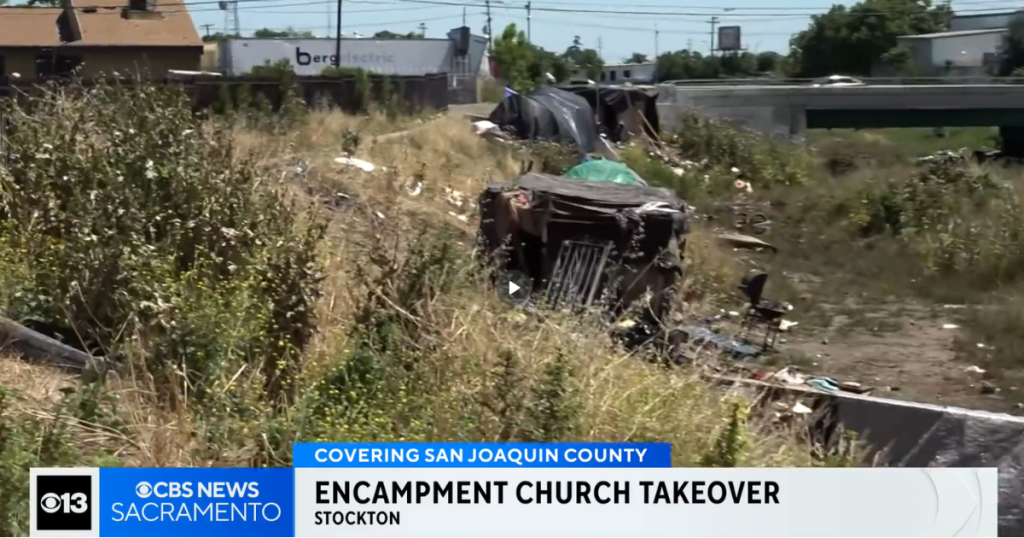
A recent CBS Sacramento report highlighted a Stockton church’s push for city action after leaders said a nearby homeless encampment had contributed to more than $500,000 in theft and property damage. ABC10 reported on the same situation and noted that a cleanup was scheduled while longer-term solutions were being discussed.
That story matters to more than churches.
It matters to business owners, property managers, schools, nonprofits, industrial sites, and anyone responsible for a property that sits near unmanaged open space, waterways, alleys, railroad corridors, or vacant parcels. When an encampment grows near a property line, the issue is rarely limited to compassion, politics, or cleanup. It often becomes a security, liability, and operations issue.
This is where business owners need to be clear-eyed. You can care about people and still protect your property. You can support humane solutions and still take practical steps to reduce theft, trespassing, vandalism, blocked access, and safety risks.
Here is how to think about the problem, and what businesses in Stockton can do about it.
Why nearby encampments can become a business security problem
Not every encampment creates direct business harm. But when an encampment is large, long-standing, or adjacent to commercial property, the risks usually expand beyond visibility and complaints.
Those risks often include:
- Trespassing onto private property
- Theft of tools, copper, equipment, or stored materials
- Vandalism, graffiti, and broken fencing
- Damage to landscaping, irrigation, and exterior fixtures
- Fires, biohazards, and illegal dumping
- Employees or customers feeling unsafe entering or leaving the property
- Repeated calls for service that pull management away from business operations
California trespass law still gives property owners rights when individuals enter or remain on private property without permission, and Stockton Police also provides a business trespass form process that can support enforcement when properly used.
The key point is this: once a nearby encampment starts affecting access, safety, or property conditions, the issue is no longer just “someone else’s problem.” It is your risk profile now.
What the Stockton church story tells local businesses
The Stockton church story is a useful case study because it shows what happens when a nearby problem goes unmanaged for too long. According to the CBS Sacramento report, church leaders tied ongoing damage and theft to the encampment and said the situation had escalated over time. ABC10 reported that public officials were working on both short-term cleanup and longer-term solutions.
That progression is common.
These situations rarely begin with a major event. They often begin with smaller warning signs:
- More people cutting through or lingering behind the property
- More trash and illegal dumping near fences or dumpsters
- More signs of tampering with locks, gates, or stored items
- More complaints from staff about feeling uncomfortable after dark
- More evidence that rear or side areas are being used without permission
The mistake many businesses make is treating each incident as isolated. They clean up the trash, replace the lock, file the complaint, and move on. But if the surrounding conditions remain the same, the pattern returns.
The smarter approach is to treat those warning signs as indicators of a shifting security environment.
What businesses should do first
If a nearby encampment is starting to affect your property, do not jump straight to one solution. Start with a structured review of your site.
1. Walk the property at the times it is most vulnerable
Walk it:
- Before opening
- After dark
- At closing
- On weekends if the property is typically quiet
Look for:
- Blind spots along fences and rear property lines
- Gaps in fencing or places where people are clearly entering
- Areas with poor lighting
- Doors, gates, or storage areas that are not visible from the main building
- Signs of repeated foot traffic or sleeping areas near the property line
- Trash accumulation or illegal dumping
You are looking for the places where your property feels unmanaged or easy to access.
2. Document everything
Take photos. Record dates and times. Keep a simple incident log.
You want to track:
- Theft attempts or actual losses
- Trespassing incidents
- Dumping or hazardous waste
- Damage to fencing, gates, or landscaping
- Employee or tenant complaints
- Calls made to city services, code enforcement, or police
If the situation gets worse, this documentation becomes critical. It shows pattern, frequency, and impact.
3. Clarify what is public property and what is private property
A lot of confusion in these situations comes from unclear boundaries. Businesses need to know:
- What land they own or control
- What belongs to the city, county, or another adjacent owner
- Which access roads, easements, drainage areas, or fence lines are shared
That matters because enforcement options differ depending on where activity is happening.
The security weaknesses these situations often expose
Nearby encampments do not create every problem. Often, they expose the weaknesses that were already there.
Poor visibility
Dumped furniture, brush, fencing gaps, and dark side yards create natural cover. If staff, patrols, or cameras cannot easily see a space, it becomes easier for unauthorized activity to happen there unnoticed.
Weak perimeter control
Properties with loose gates, low fencing, unlocked rear access, or easy walk-through paths become much harder to protect when activity rises nearby.
Inconsistent monitoring
A property may look fine during business hours and become highly vulnerable after dark. If no one is checking the rear lot, side alley, or loading area at night, the site may effectively be open.
No structured response plan
Many businesses do not know who handles what. One employee calls police. Another calls the city. Another tells a trespasser to leave. Another does nothing. That inconsistency weakens the response and creates confusion.
Practical steps to harden the property
Once you know where the risks are, your goal is to make the property look and function like a managed space.
Improve lighting
Lighting is one of the fastest ways to reduce vulnerability.
Focus on:
- Rear perimeters
- Side yards
- Parking lot edges
- Dumpster enclosures
- Loading areas
- Employee exit paths
A property that is well lit sends a very different message than one with dark corners and broken fixtures.
Reinforce fencing and gates
If there are known cut-through points or areas where fencing is repeatedly breached, strengthen them. Depending on the site, that may mean:
- Repairing fence damage immediately
- Adding anti-climb features
- Improving gate hardware and locking
- Closing obvious access gaps
- Adding barriers where vehicles or carts can be pushed through
Clean up aggressively
Trash attracts more trash. Stockton has already made illegal dumping a city priority through newer local enforcement efforts and code tools, which reflects how seriously these issues affect neighborhoods and business corridors.
Fast cleanup does two things:
- Reduces hazards and concealment
- Signals that someone is paying attention
A neglected-looking property almost always invites more activity, not less.
Use signage the right way
Signs alone will not solve the problem, but they support enforcement and clarify boundaries. Depending on the property, that may include:
- No Trespassing
- Private Property
- No Dumping
- Area Monitored by Security Patrol
Make sure signs are visible and placed where they support your real access points and vulnerable areas.
Why patrol and security presence matter
When nearby activity rises, many business owners rely on cameras alone. Cameras help, but they are not a complete answer.
A camera may record someone cutting through a fence or checking vehicle doors. It does not create visible deterrence, and it does not interrupt behavior in the moment.
That is where a patrol presence helps.
A well-designed patrol program can:
- Check vulnerable perimeter zones after hours
- Document signs of attempted entry or damage
- Identify repeat loitering or trespass patterns
- Increase visible deterrence with marked vehicles and uniformed officers
- Call attention to environmental issues such as failed lighting or broken gates before they become bigger losses
For many sites, especially in commercial and industrial areas, patrol is the most practical way to cover the windows when employees are gone but risk remains high.
Work with the city, but do not wait on the city
Stockton has code enforcement tools and city departments that can help address property maintenance, dumping, and certain nuisance conditions. The city’s code enforcement framework specifically ties property maintenance to community health, safety, and welfare.
Use those channels where they apply. Report dumping. Report unsafe conditions. Document repeated impacts.
But do not make the mistake of assuming that city action alone will protect your business in the near term.
City response can take time. Broader homelessness solutions take even longer. Your business still has to operate tomorrow morning.
That is why the most effective approach is usually two-track:
- Report and coordinate with city or law enforcement channels where appropriate
- Harden and monitor your own property immediately
Train your staff on what to do
If employees are the first people noticing problems, they need a clear playbook.
Make sure they know:
- Which areas are off-limits to the public
- Who to call if they see trespassing or suspicious activity
- Not to confront people alone in high-risk situations
- How to document what they saw
- How to report repeat concerns consistently
This matters because these situations often escalate through repeated small incidents, not one dramatic event.
Final thought: protect the property you are responsible for
The recent Stockton church story is a reminder that nearby encampment activity can have real consequences for adjacent properties. It can mean theft, damage, employee fear, and constant operational disruption.
For businesses, the lesson is not to panic. It is to get practical.
You do not have to solve homelessness to protect your property.
You do need to:
- Understand where your site is vulnerable
- Document the pattern
- Improve visibility and perimeter control
- Clean up quickly
- Use patrol and monitoring where appropriate
- Give your team a clear response plan
If your property is already feeling the effects of nearby encampments, loitering, dumping, or trespassing, now is the time to tighten your plan before the next incident costs more than the last one.
If you want a second set of eyes on your site and a practical strategy to reduce exposure, REQUEST A PROPOSAL HERE.