
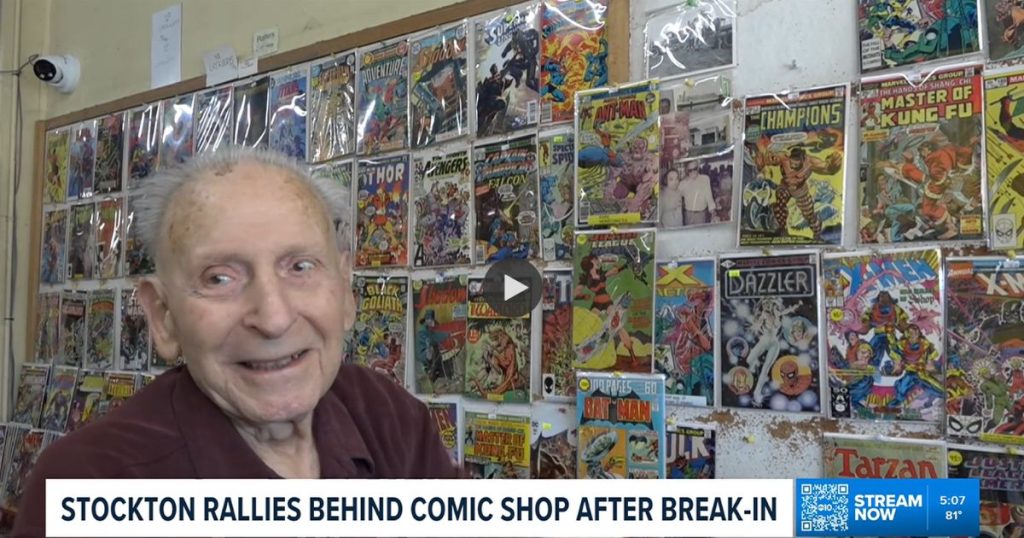
A recent ABC10 story about a 98-year-old Stockton comic shop owner losing thousands in a break-in struck a nerve across the community. The report described how community members rallied around the longtime business after the burglary, offering support after the owner suffered a significant loss. ABC10 also noted that the store is located on Stockton’s Miracle Mile and that Stockton police were still investigating the circumstances.
That story is personal, emotional, and local. It is also a warning.
For neighborhood retailers, the lesson is not just that break-ins happen. It is that many of the losses tied to after-hours burglaries are preventable when business owners take storefront security seriously before an incident happens, not after.
This article is for small business owners, property managers, and retail operators who want practical guidance on how to reduce the risk of burglary, protect their storefronts after hours, and create the kind of visible security presence that makes criminals move on to an easier target.
Why this story matters to Stockton retailers
Small retail businesses often operate with thin margins, small teams, and limited hours. A break-in does not just mean a broken door or stolen merchandise. It can mean:
- Lost revenue while the business cleans up and reopens
- Damage to displays, fixtures, and entry systems
- Employee anxiety and fear about coming to work
- Increased insurance costs or claims disputes
- A reputational hit if customers start to see the business as vulnerable
The ABC10 reporting on the Stockton comic shop story highlighted the emotional side of burglary as well as the financial hit. For businesses that have served a neighborhood for years, the impact of a break-in is often larger than the invoice for repairs. It is a sense of violation that affects owners, staff, and regular customers.
That is why burglary prevention is not just a facilities issue. It is a business continuity issue.
Burglary is usually a crime of opportunity
Most storefront burglaries are not sophisticated heists. They are fast, practical, and opportunistic. The offender looks for one or more of the following:
- A weak front door or aging lock
- Poor lighting
- A blind spot where no one will see them work
- Predictable overnight conditions
- Easy access to high-value merchandise near the front
- A street or alley that allows for a fast escape
Crime Prevention Through Environmental Design, often referred to as CPTED, focuses on reducing these opportunities by improving visibility, access control, and the appearance of active management. The U.S. Department of Justice’s COPS Office describes CPTED as an approach that looks at how environmental conditions create opportunities for crime and how changing those conditions can reduce risk.
That matters for storefront retail because criminals are constantly making simple decisions. They ask:
Can I get in quickly
Can I get out quickly
Will anyone notice
Will anyone respond
Your goal is to make the answer to those questions less attractive than the next block over.
Storefront hardening starts at the front door
When people talk about storefront hardening, they often jump straight to cameras. Cameras matter, but they are not the first line of defense. The first line is the physical entry point itself.
Reinforce doors and frames
Many retail burglaries happen because the door is the weak point. If the frame, hinges, strike plate, or glazing are weak, the lock itself may not matter much.
A hardening review should include:
- The condition of the door frame
- The quality of the lock and strike plate
- The strength of hinge screws and mounting points
- Whether glass panels near the hardware make it easy to bypass the lock
- Whether the door fully latches every time it closes
If your storefront uses older hardware, upgrading it may be one of the highest-value security improvements you can make.
Review glazing and window exposure
Large front windows are valuable for merchandising, but they can also make it easy for offenders to:
- See desirable merchandise
- Assess the interior layout
- Identify what is near the front and easiest to grab
That does not mean you should cover your windows. It means you should think intentionally about what is visible after hours. High-value items placed directly behind glass near the entrance may be inviting the wrong kind of attention.
Control rear and side access too
Many retailers focus on the storefront and forget about rear doors, shared alleys, and side corridors. In mixed-use or older retail strips, side and rear entries are often less visible and less secure than the front.
A strong burglary prevention plan includes all entry points, not just the one customers use.
Lighting is one of the most underused burglary prevention tools
The CDC’s NIOSH guidance on retail violence prevention notes that robbery-related violence prevention strategies often include environmental changes such as improved visibility, controlled access, and lighting.
For small retail businesses, good lighting does three things:
- Improves natural surveillance from the street or neighboring businesses
- Reduces hiding places near doors and side approaches
- Supports cameras by improving image quality after dark
Walk your property at night and ask:
- Is the front entrance clearly visible from the street
- Are side doors and alley access points well lit
- Are there dark pockets near dumpsters, utility panels, or back gates
- Does the lot or sidewalk feel actively managed or ignored
If a person can work on your door or window for more than a few seconds without being clearly visible, lighting needs attention.
Visible security presence changes behavior
One of the biggest differences between a property that gets targeted and one that gets bypassed is visible security presence.
That presence does not always mean a full-time on-site officer. For many neighborhood retailers, the right solution is a combination of:
- Marked patrol vehicles
- After-hours perimeter checks
- Randomized patrol timing
- Time-on-site inspections that go beyond “drive-by” checks
The reason visible presence matters is simple: burglars prefer certainty. They want to know the property is dark, quiet, and unattended. A marked vehicle, a patrol officer checking doors, or a record of routine after-hours activity disrupts that certainty.
This is especially important for neighborhood retail corridors, where criminals may test multiple businesses before choosing a target.
If your storefront is part of a Miracle Mile-style strip, downtown district, or shared shopping corridor, patrol presence can also protect more than one business at a time by increasing visible oversight across the entire block.
Why “overnight patrol” should mean more than a quick pass
Some business owners believe they have after-hours security because a patrol company “checks the property.” The question is what that actually means.
A real after-hours patrol should include:
- Visual inspection of all doors and locks
- Walks around the rear and side of the building if accessible
- Attention to broken lighting, damaged fencing, or tampering
- Documentation with time-stamped notes or photos when appropriate
- Enough time on site to detect conditions, not just enough time to say they were there
This is where a lot of businesses get burned. A low-cost patrol service that charges by “checks” instead of meaningful time can create a false sense of protection.
If you want to evaluate whether your current patrol setup is real coverage or just a checkbox, our article on how to protect yourself from patrol service rip-offs is worth reviewing. The same logic applies to any neighborhood retail business relying on overnight patrols to protect a storefront.
Burglary prevention should include what happens before the break-in
A store is rarely hit with no warning signs at all. Owners and staff often notice patterns before the actual burglary.
Those patterns might include:
- Loitering near the storefront around closing time
- People photographing doors, locks, or windows without a clear reason
- Repeated attempts to open doors after hours
- Suspicious vehicles parked near side or rear access points
- Trespassing in shared alleys or around dumpsters
- Dumping, vandalism, or lower-level nuisance activity that signals weak site control
The National Retail Federation’s workplace violence prevention guidance emphasizes the importance of training, reporting, and awareness in retail environments because early detection of suspicious behavior is often what allows businesses to intervene before a serious event occurs.
Your staff should know:
- What suspicious pre-incident behavior looks like
- How to report it internally
- When to call police or security
- Why even “small” patterns matter
One ignored red flag is not always a crisis. Repeated ignored red flags often become one.
Employee safety matters as much as merchandise protection
Burglary prevention is usually discussed in terms of protecting inventory, but your team is just as important.
If employees are:
- Opening or closing alone
- Walking to cars after dark
- Entering through rear or side doors in low-visibility areas
then your burglary prevention plan should include employee safety procedures too.
Best practices include:
- Two-person opening and closing when possible
- Clear parking and escort policies after dark
- Keeping keys ready and avoiding distractions when entering or leaving
- Reporting suspicious persons or vehicles immediately
- Using security officers or patrols to support arrival and departure windows
These issues overlap with parking lot security and broader retail safety. If your team feels exposed when arriving or leaving, that is not separate from burglary risk. It is part of the same vulnerability pattern.
Community visibility and neighborhood retail protection
One reason the comic shop story resonated is that it highlighted how much a neighborhood business can mean to a community. That is also why neighborhood retail deserves a security approach that goes beyond individual storefronts.
Small businesses in shared corridors benefit when:
- Merchants communicate with one another
- Property owners maintain lighting and exterior upkeep
- Security patrols cover multiple sites within the same district
- Repeat suspicious activity is documented and shared appropriately
- City, police, property managers, and business owners all understand that visible blight invites more crime
The Stockton comic shop story was a reminder that one break-in affects more than one owner. It affects the perception of the whole corridor. Customers start wondering which store is next. Neighbors start assuming that no one is really watching. Community support after the fact is powerful, but visible prevention before the fact is even better.
Practical burglary prevention checklist for small retailers
If you own or manage a small retail business, here is where to start:
Physical hardening
- Inspect all doors, locks, strike plates, and frames
- Reinforce weak glazing or vulnerable side panels
- Review rear and side entries, not just the front door
Visibility
- Improve front and rear lighting
- Eliminate dark spots and trim visual obstructions
- Avoid leaving high-value merchandise directly visible near the entrance after hours
Patrol and presence
- Use meaningful overnight patrols, not just quick checks
- Ask what patrol officers actually inspect and document
- Increase visible patrol activity during periods of known risk
Staff awareness
- Train employees to recognize and report pre-incident behavior
- Create simple opening and closing procedures
- Prioritize safe arrival and departure practices
Neighborhood coordination
- Share concerns with nearby businesses and landlords
- Track repeat suspicious activity across the corridor
- Treat nuisance activity and property neglect as early warning signs
Final thought
The recent Stockton comic shop break-in is more than a sad local story. It is a reminder that neighborhood retail businesses are not too small to be targeted and too valuable to leave vulnerable.
Burglary prevention is not about fear. It is about making your store harder to hit, faster to notice problems, and less attractive than the next target.
For small businesses, that means taking storefront hardening seriously, investing in real after-hours patrols, and using visible security presence to change what offenders see when they look at your property.
Because when criminals are deciding where to strike, they are not looking for the strongest business. They are looking for the easiest one.
If you want a second set of eyes on your storefront, after-hours security plan, or neighborhood retail risk profile, now is the time to tighten your approach before the next incident costs more than the last one.