
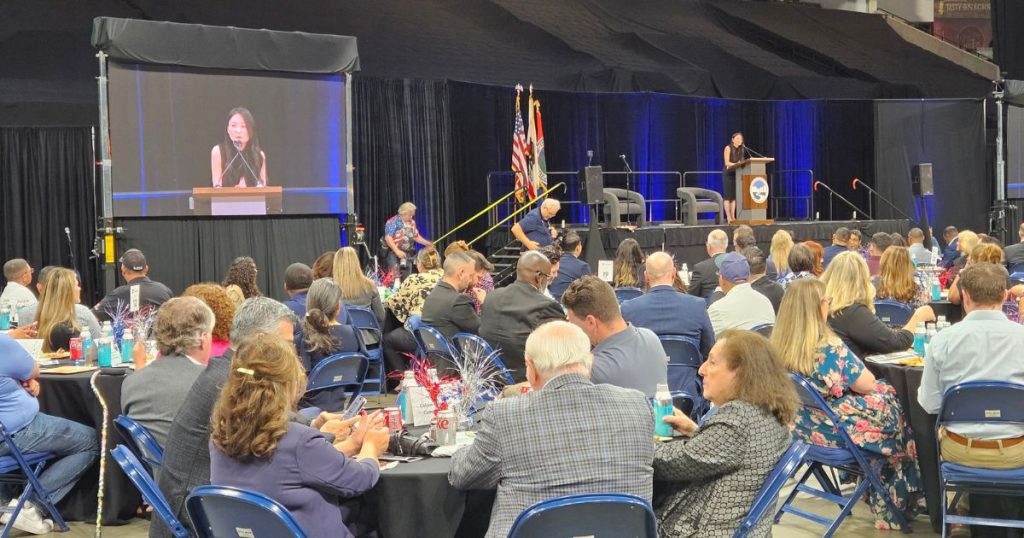
At this year’s Stockton State of the City, Mayor Christina Fugazi shared a message centered on momentum. The event, held on May 20, 2026, highlighted public safety improvement, city cleanup efforts, and a broader theme that Stockton is ready for growth, development, and the next big thing. The Stockton Chamber described the event as the mayor’s second State of the City address, focused on the city’s successes and vision for the future. Local coverage from CBS Sacramento, ABC10, and KCRA reflected that same message, with emphasis on improved public safety, crime reduction, housing, and city progress.
That is good news.
But here is the mistake many businesses make when they hear positive public safety news: they relax too quickly.
Crime trends can improve at the city level while risks remain active at the property level. A safer city does not automatically mean your parking lot, storefront, loading area, warehouse yard, or office entrance is protected. In fact, when confidence rises, complacency often follows, and that can create a new layer of vulnerability.
At Delta Protective Services, we were proud to sponsor the event and hear firsthand the mayor’s message about progress and possibility. We believe Stockton is ready. Ready for growth. Ready for investment. Ready for stronger neighborhoods and stronger business corridors. But part of what makes a city truly ready is whether its businesses are staying proactive about security while that growth happens.
Because the goal is not just to celebrate public safety improvement. The goal is to keep building on it.
Why citywide progress does not replace site-level security
Citywide progress matters. It affects confidence, economic development, investor interest, and how residents feel about where they live and work. But businesses do not operate at the citywide level. They operate at the property level.
Your risks are shaped by what happens:
- In your parking lot
- At your storefront
- Around your dumpster enclosure
- Near your employee entrances
- At your loading dock
- Along your fence line
- In the hours after your team goes home
A city may be improving overall while your specific property still struggles with:
- Trespassing
- Vehicle break-ins
- Loitering
- Illegal dumping
- Vandalism
- After-hours access issues
- Weak lighting and blind spots
That is why smart business owners do not ask only, “Is crime down?” They ask, “What are the patterns on my property, and are we doing enough to stay ahead of them?”
That is the difference between optimism and preparedness.
Stockton’s growth message makes proactive security even more important
The “Stockton is ready” message matters because growth changes risk. As business activity increases, you often see:
- More customers and more vehicles
- More deliveries and vendor traffic
- More pressure on parking, access control, and shared spaces
- More vacant parcels or active construction in transition areas
- More people moving through commercial corridors at different hours
Growth is positive, but it also creates complexity. The more active a corridor becomes, the more important it is to manage visibility, access, and response.
Public safety improvement should not encourage business owners to lower their guard. It should motivate them to strengthen the foundation while conditions are improving. That is how you protect momentum instead of losing it.
Why businesses get caught off guard when the headlines improve
When a city is making positive progress, business owners often slip into one of three traps.
1. They assume fewer incidents mean less risk
A temporary reduction in reported crime does not mean your vulnerabilities disappeared. A weak perimeter is still weak. A dark parking lot is still dark. A side entrance with no camera coverage is still an open question after hours.
2. They stop reviewing their security plan
Many properties continue using outdated post orders, stale patrol routes, or generic expectations that were written for a different risk picture. If your contract, patrol pattern, or officer priorities have not been reviewed recently, you may be protecting last year’s problems while missing this year’s.
3. They rely too heavily on public systems
Law enforcement, fire, and public works are critical parts of community safety. The mayor’s presentation reportedly highlighted all three, which reinforces the idea that Stockton’s public systems matter in the city’s readiness for growth. But those systems do not eliminate the need for private businesses to manage their own risk. Public safety and private security are not substitutes. They are complementary layers.
What a proactive security plan actually looks like
A proactive security plan is not just a guard standing on site or a camera pointed at the front door. It is a practical, property-specific system designed to reduce opportunity, improve visibility, and create a clear response process before something goes wrong.
For most local businesses, that plan should include five core parts.
1. Start with a real property assessment
Before you add patrols, lights, or new policies, take an honest look at the property.
Walk it at the times it is most vulnerable:
- Before opening
- At closing
- After dark
- On weekends
- During slow traffic periods
Look for:
- Burned-out or poorly placed lights
- Blind corners
- Areas where people can linger unseen
- Fencing gaps
- Doors that do not fully latch
- Parking lot edges that feel unmanaged
- Utility and dumpster areas that attract dumping or trespassing
This kind of site walk is one of the simplest and most valuable things a business can do. It helps you see the property the way an opportunist would see it.
2. Match security to the real risk windows
Not every property needs the same coverage, and not every hour carries the same risk.
A proactive plan asks:
- When are we most vulnerable?
- Which areas need actual visibility?
- What incidents or nuisance activity are most likely here?
For some businesses, the answer is late-night parking lot patrol. For others, it is opening and closing support, after-hours perimeter checks, or stronger access control at delivery points.
This is where a lot of businesses waste money. They buy coverage that is convenient to schedule, not coverage that is tied to the real risk on site.
3. Use visible deterrence, not just passive monitoring
Cameras matter. Alarm systems matter. But neither one creates the same immediate deterrent as visible presence.
A marked patrol vehicle, a uniformed officer, or documented after-hours perimeter checks tell people something very different than an unattended camera does. They say the property is watched, managed, and likely to produce a response.
That matters because most low-level property crime and nuisance activity is about convenience. If your site looks easier than the next one, it becomes the test case.
A proactive plan is designed to make your site feel less convenient to misuse.
4. Keep your exterior looking managed
Public safety and property condition are closely connected. Cleanup efforts were part of the mayor’s broader message, and for good reason. Exterior neglect sends a message. So does order.
When a site looks unmanaged, it attracts more unmanaged behavior.
That means staying on top of:
- Graffiti
- Illegal dumping
- Overgrown landscaping
- Damaged fencing
- Broken lights
- Cluttered side yards
- Unsecured dumpsters or pallets
Maintenance is not separate from security. It is one of the most visible parts of it.
5. Review and update expectations regularly
A proactive plan is not “set it and forget it.” As your business changes, your security needs change with it.
You should be reviewing:
- Incident patterns
- Tenant or employee complaints
- Patrol reports
- Access control issues
- Environmental weaknesses
- Seasonal changes in activity
This is especially important in a city that is changing and trying to grow. When growth comes, your property may become more active, more exposed, or more attractive to the wrong kind of attention.
Why this matters for small businesses especially
Large organizations may have dedicated facilities teams, internal security leadership, and capital budgets for improvements. Small businesses often do not.
That means small business owners are more likely to:
- Delay upgrades
- Rely on hope instead of a real plan
- Assume “we’ve been fine so far”
- React only after an incident forces action
But small businesses are often the least able to absorb disruption.
A single break-in, repeated dumping issue, vehicle burglary, or after-hours trespassing problem can cost more than the owner expected to spend on prevention in the first place.
That is why proactive security planning is not just for large facilities or high-crime sites. It is one of the smartest decisions a small business can make when a city is improving and growth is on the table.
DPS’s perspective: being part of the solution
One of the most important parts of the State of the City message was the reminder that progress is shared. Public safety improvement is not only the work of city leaders. It also depends on businesses, community groups, and local partners continuing to show up.
At DPS, we believe we are part of that solution.
That belief is not abstract. Lawrence has spoken openly about a local park where, after a tragic murder around two decades ago, DPS began donating security patrols as a way to help protect the area and support the community. Since then, there have reportedly been no similar issues there. That kind of commitment reflects the larger point: community safety improves when public systems and private action reinforce each other.
That is the posture local businesses should take too.
Not fear. Not complacency. Partnership.
If Stockton is ready, then businesses should be ready too.
Ready to protect their employees.
Ready to harden vulnerable areas.
Ready to review outdated assumptions.
Ready to invest in visibility, patrol, and preparedness before there is a crisis.
Questions every business should ask right now
If you want to know whether your property is truly aligned with the city’s positive momentum, start with these questions:
- Do we know our top three site-specific security vulnerabilities?
- Have we walked the property after dark in the last 30 days?
- Are our current patrols or officer assignments focused on the highest-risk hours?
- Do our staff know what to report and who to call?
- Does our property look managed from the outside?
- Have we reviewed our security contract or scope in the last year?
- Are we reacting to the last problem, or preventing the next one?
If you cannot answer those clearly, then your security plan may be more reactive than proactive.
Final thought
Yes, public safety in Stockton may be improving. That is encouraging, and it matters. It supports investment, confidence, and the city’s ability to grow. The mayor’s State of the City message made that clear, and DPS was proud to support an event built around that momentum.
But a stronger city does not eliminate the need for stronger site-level security.
It raises the stakes for getting it right.
The businesses that will benefit most from Stockton’s progress are not the ones that lower their guard. They are the ones that use this moment to build smarter systems, close obvious gaps, and stay proactive while the city moves forward.
That is how you protect your property.
That is how you support your employees and customers.
And that is how local businesses become part of keeping Stockton ready for what comes next.