
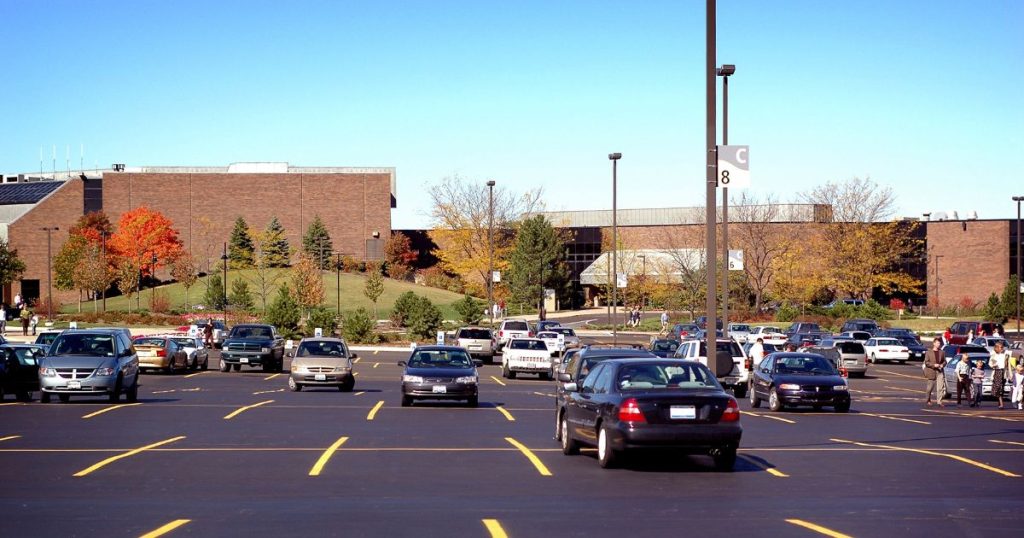
When most people think about crime, they picture what happens inside a store, office, or bank. In reality, a lot of the risk lives just outside the front door.
Parking lots and garages are consistently ranked among the most common locations for crime in the United States. One analysis drawing on FBI data found that parking facilities are the third most likely place for crime, with well over 100,000 crimes against persons occurring in these spaces in a single year. Other research shows that a significant share of property crimes, vehicle thefts, and assaults happen in or around parking areas.
Add darkness, distraction, and isolation to the mix, and the risk goes up even more.
For employers and property managers, that creates a very specific responsibility: it is not enough for the building to be secure if people do not feel safe walking to and from their vehicles before dawn, after dark, or during late shifts. Customers and employees rarely distinguish between “inside” and “outside” security. To them, it is all part of their experience with your business.
The good news is that parking lot risk is manageable. With the right combination of design, technology, policies, and security presence, you can dramatically reduce the chance of incidents and send a clear message that safety is a priority.
This guide walks through the fundamentals of parking lot security after dark, with a focus on practical steps businesses can take and how professional security services fit into a layered strategy.
Why Parking Lots Are High-Risk Environments
A parking lot looks simple: pavement, spaces, maybe a few lights and islands. From a security perspective, it is anything but simple.
Several factors make parking lots and garages attractive to criminals and challenging for businesses:
- People are distracted, looking for keys, phones, or kids, not for threats.
- Visibility is often poor, especially at night or in multi-level structures.
- There are many hiding places between vehicles, columns, and landscaping.
- People are often alone and carrying valuables: bags, cash, merchandise, laptops.
- Vehicles themselves are high-value targets for theft and catalytic converter crime.
Studies and safety organizations consistently warn that parking lots can present a significant risk of workplace violence and other crimes, depending on their design, location, and time of day. Data compilations of parking lot crime show that a large share of property crimes and a meaningful percentage of violent incidents occur in these spaces, with risk rising during evenings, weekends, and the holiday season when lots are busier and drivers are more distracted.
From a liability standpoint, businesses and property owners can also face claims related to:
- Assaults or robberies in parking areas
- Vehicle theft and break-ins
- Slip-and-fall incidents due to lighting or maintenance issues
- Poorly marked lanes, crossings, or speed control leading to accidents
The bottom line: parking lots and garages are part of your workplace. They are not “neutral ground.” Treating them as such is both a safety and liability risk.
Start With a Parking Lot Security Assessment
Before adding cameras, patrols, or new lights, you need to understand what you are working with. A parking lot security assessment is the foundation of any effective plan.
If you have not done a full review of your site recently, the framework from your broader business security assessment is a good place to start. The approach used in How to Conduct Your Own Business Security Assessment (Before It’s Too Late) can easily be adapted to focus specifically on your parking areas.
Walk the lot like a customer, then like an intruder
Do at least two walkthroughs:
- Once during normal business hours
- Once after dark, ideally at the times when employees arrive or leave
As you walk, ask:
- Where are the darkest areas?
- Are there blind spots behind large vehicles, columns, dumpsters, or landscaping?
- Are there places where someone could loiter without being easily seen from the building?
- How far is the walk from the building to the furthest parking spaces?
- Are exits, crosswalks, and pedestrian routes clearly marked?
Take photos and notes. If you feel uneasy in any area as a reasonably aware adult, your employees and customers probably do too.
Review incident history and informal reports
Next, look at the last 12–24 months of:
- Incident reports
- HR or safety complaints
- Customer feedback about feeling unsafe
- Police calls related to your address
Patterns matter. If most issues happen between certain hours, near a particular entrance, or in an out-of-the-way corner of the lot, those areas should be your initial focus.
Do not ignore “smaller” issues such as repeated loitering, suspicious vehicles, or minor thefts from cars. Those are often early warning signs of a larger problem.
Involve employees and tenants
Frontline staff, tenants, and regular customers see things that never make it into formal reports. Ask:
- Are there times when you feel uncomfortable walking to or from your vehicle?
- Are there particular areas you avoid because they feel unsafe?
- Have you noticed recurring behavior or vehicles that seem out of place?
This qualitative feedback fills in the gaps that paperwork can miss.
Lighting and Visibility: Your First Line of Defense
Lighting is one of the most cost-effective parking lot security tools you have. It does not replace guards or cameras, but it makes every other security measure more effective.
Poorly lit parking areas see significantly higher rates of crime compared with well-lit lots. Good lighting increases natural surveillance, reduces hiding spots, and signals that the property is actively managed.
When evaluating lighting, consider:
- Are all fixtures working, or are there burnt-out or flickering bulbs?
- Are main pedestrian routes to and from the building well lit?
- Are entrances, exits, and payment or ticketing areas clearly visible?
- Are there strong contrasts between bright and dark areas that make it hard to see?
Practical steps include:
- Replacing burned-out lamps quickly and implementing a regular inspection schedule.
- Upgrading to LED fixtures where possible for better visibility and lower maintenance.
- Adding lighting to remote corners, employee parking areas, and loading zones.
- Ensuring light poles are placed to minimize deep shadows between vehicles.
Lighting is not just about security; it is also about slip-and-fall prevention and vehicle accident reduction, which have their own liability implications. Many claims involving parking lot injuries cite poor visibility as a contributing factor.
Cameras, Signage, and Natural Surveillance
Cameras are an important layer in parking lot security, but they are often misunderstood. A camera cannot stop a crime by itself. What it can do is:
- Deter some would-be offenders if it is clearly visible
- Provide evidence after an incident
- Support real-time response when someone is actively monitoring
When planning camera coverage:
- Prioritize entrances, exits, and main pedestrian paths.
- Cover payment stations, loading areas, and high-value vehicle zones.
- Avoid leaving long “dead zones” between camera views.
- Ensure image quality is good enough to identify vehicles and individuals.
Clear signage supports both deterrence and liability protection. Signs might:
- Indicate that the area is under video surveillance
- Clarify that loitering, camping, or unauthorized overnight parking are prohibited
- Direct employees and customers to preferred parking and walking routes
Natural surveillance is another key piece. Wherever possible:
- Keep landscaping trimmed so it does not create hiding spots.
- Avoid structures, dumpsters, or storage that block views of key areas.
- Position building windows, security desks, or guard shacks to have a view of the lot.
If your assessment reveals large gaps in visibility or coverage, those are strong candidates for either camera placement or guard/patrol integration.
For a broader view on combining cameras, physical presence, and other measures, your article on How to Conduct Your Own Business Security Assessment (Before It’s Too Late) provides a helpful checklist.
Security Patrols and Guard Presence in Parking Lots
Technology and design go a long way, but they do not replace trained people. A uniformed security presence can dramatically change both behavior and perception in a parking lot.
There are two common approaches:
- On-site security officers assigned to monitor the lot and building perimeter
- Mobile patrol services that visit your property on a schedule or in response to alarms
The right approach depends on your:
- Size and layout
- Hours of operation
- Incident history
- Budget and risk tolerance
On-site officers are especially useful when:
- Employees arrive or leave in waves before dawn or after dark.
- There have been assaults, carjackings, or repeated serious incidents.
- Your business handles cash or high-value goods and staff carry them to vehicles.
- You want escorts available for employees at closing.
Mobile patrols can be highly effective for:
- Multi-tenant retail centers and office parks
- Industrial and warehouse districts
- Locations with predictable risk spikes (evenings, weekends, holidays)
Marked patrol vehicles and uniformed officers provide:
- A visible deterrent that encourages offenders to choose an easier target
- Real-time response if suspicious activity or incidents are observed
- Regular checks on lighting, gates, trespassing, and vehicle break-ins
To understand where mobile patrols fit in a broader strategy, see your article on weekend and holiday coverage for idle sites. Many of the same principles apply to parking lots that sit mostly empty overnight or during off-hours.
A good security provider will:
- Help you identify the highest-risk times and zones in your lot
- Recommend a mix of patrol frequency and dwell time, rather than quick drive-throughs
- Provide detailed reports, including what they saw, who they contacted, and issues they addressed
If patrol services are priced solely by “checks” instead of by meaningful time on site, you may end up with very little actual security presence. Your article on how to protect yourself from security patrol service rip-offs digs into this issue and explains why minutes matter.
Policies, Training, and Communication
Physical measures and security presence are only part of the equation. Clear policies and employee training are crucial for parking lot safety.
Key areas to address include:
- Where employees are encouraged or required to park
- How staff should request escorts, if offered
- What to do if they see suspicious activity or feel unsafe
- How to report lighting problems, damage, or concerning behavior
Authoritative safety organizations emphasize that employers should treat parking lots as part of the workplace and include them in their violence prevention and safety programs. That means your policies, training materials, and incident reporting procedures should explicitly reference parking areas, not just what happens inside the building.
Consider including in your training:
- Encouraging employees to walk with others when possible after dark
- Staying aware and avoiding distractions, such as walking with headphones at full volume
- Having keys ready before leaving the building
- Looking around and inside their vehicle before entering
- Reporting anyone loitering, watching others, or trying door handles
For personal-level guidance that you can share with your team, your article Stay Safe This Holiday Season: 5 Personal Security Tips for Shoppers and Employees offers practical advice that applies year-round, not just during the holidays.
Integrating Parking Lot Security Into Your Overall Plan
Parking lot security should not exist in its own silo. It should be integrated with:
- Your overall security strategy and contract
- Your workplace violence prevention program
- Your incident reporting, investigation, and follow-up processes
- Your relationships with local law enforcement and neighboring businesses
An integrated approach might include:
- Including parking lots in your regular security assessments and walk-throughs
- Adding parking-related KPIs to your security contract (for example, response times, patrol coverage, and incident detection)
- Sharing patterns and concerns with nearby properties so you can coordinate efforts
- Updating your security scope and post orders when operations or risk patterns change
Authoritative guidance from agencies such as OSHA and NIOSH emphasizes the importance of assessing workplace violence risk and incorporating site-specific strategies into prevention programs. Parking lots, as frequent sites of both vehicle crimes and personal confrontations, should be part of that conversation.
Final Thought: The Walk Between the Car and the Door Matters
For many employees and customers, the last few hundred feet between the building and their car are where they feel most vulnerable, especially after dark. If you ignore that experience, you risk more than theft or vandalism. You risk people choosing not to come back.
Parking lot security is not just about adding more lights or a camera. It is about:
- Understanding your specific risks through a focused assessment
- Improving visibility and eliminating easy hiding spots
- Combining cameras, signage, and natural surveillance thoughtfully
- Using trained security officers and patrols where they will have the most impact
- Backing everything up with clear policies and practical training
If it has been a while since you looked critically at your parking areas, now is the time.
A structured review with an experienced security partner can help you prioritize improvements, avoid unnecessary spending, and build a parking lot environment where employees and customers feel safe every time they pull in, no matter how dark it is.
If you would like help assessing your parking lot and building a layered security plan tailored to your property, Delta Protective Services is ready to assist.
Request a Proposal or Security Review:
https://deltaprotectiveservices.com/proposal-request-form/