
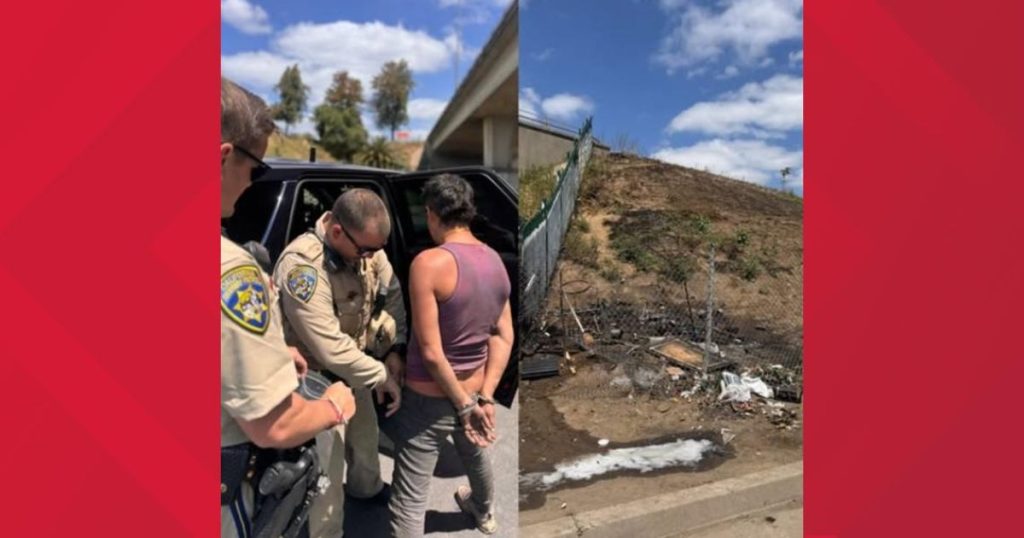
A recent Stockton incident is an important reminder that unmanaged activity near commercial property can become more than a nuisance. According to ABC10, a suspect was arrested on arson charges after allegedly starting a fire during the clearing of a homeless encampment in the Stockton area. The report says the suspect became agitated during the cleanup, intentionally started a fire, and was then taken into custody by California Highway Patrol officers. Officials said the fire was extinguished without injuries. CHP also noted that encampments near active traffic can create hazards for motorists and nearby residents.
For local businesses, this is not just a law enforcement story. It is a property protection story.
A fire near or adjacent to commercial property can quickly become a business security issue, an employee safety issue, and a continuity issue. Even if flames never touch your building, a nearby fire can create blocked access, utility disruption, traffic hazards, smoke damage, cleanup delays, and renewed trespassing concerns. For businesses in Stockton, especially those near freeway corridors, drainage channels, vacant land, alleys, or industrial edges, the lesson is simple: if unmanaged activity is happening near your property, you need to think beyond trespassing and start thinking about fire exposure too.
This article explains what local businesses can learn from the Stockton encampment fire, why nearby encampments can increase fire risk, and what practical steps owners and property managers can take to reduce exposure while still responding to the issue with professionalism and common sense.
Why this Stockton story matters to businesses
The Stockton incident happened during a cleanup effort, which makes it especially relevant. It shows that these situations can shift quickly from nuisance management to active emergency response. A site that looks like a trash or trespassing issue one minute can become a life-safety event the next. According to ABC10, CHP specifically warned that encampments near freeways create hazards for drivers and nearby residents, which broadens the concern beyond the immediate camp area.
That matters for businesses because properties near unmanaged encampments may face several overlapping risks:
- Fire caused by intentional acts, cooking, heating, or unsafe electrical improvisation
- Illegal dumping and debris accumulation that can increase combustible load
- Blocked visibility around fences, alleys, and utility zones
- Increased trespassing near rear property lines, dumpsters, and loading areas
- More demand on emergency services and slower recovery when incidents occur
This is why fire risk should be part of any commercial property discussion about homelessness, encampments, and adjacent nuisance activity. If your property is close enough to be affected by smoke, access restrictions, or spreading fire conditions, then it is close enough to justify a security and prevention response.
Encampments can create fire conditions faster than many owners realize
Fire risk near unmanaged encampments is not theoretical. The broader fire safety community has been warning about it for years. NFPA Journal has documented that encampments can create serious fire and life-safety issues for cities and responders, including open flames, improvised heating and cooking, combustible debris, and difficult site conditions for emergency access. The article also notes that the fire and code enforcement challenge is often complicated by legal, humanitarian, and operational realities.
In addition, a published fire-safety study focused on homeless encampments found that open flames are often used for cooking and warmth, while crowded conditions and makeshift materials can amplify burn risk and make fire prevention more difficult.
For a nearby business, that means fire exposure may increase when there is:
- Dry brush, pallets, or dumped material near fence lines
- Furniture, trash bags, shopping carts, mattresses, or scrap creating fuel
- Improvised electrical connections or open flames
- Tents or makeshift shelters close to utility easements, walls, or service corridors
- Limited sightlines that make it hard to see smoke or activity early
This is also why illegal dumping should never be treated as “just trash.” Dumped debris can combine with other conditions to create both concealment and fuel. That is one reason our related article, Illegal Dumping Is a Security Issue, Not Just a Cleanup Issue, matters so much in this conversation.
Why cleanup alone is not enough
One of the biggest mistakes businesses make is assuming that once a city clears an area, the risk is gone. In reality, cleanup often creates a short reset window, not a permanent solution. If the surrounding conditions remain unchanged, activity can return and risk can rebuild quickly.
That is exactly why our companion article, Why Cleanup Alone Is Not a Security Plan: What Stockton’s Encampment Return Teaches Property Owners, is so relevant here. A cleared site that still has dark edges, weak perimeter control, and no visible monitoring remains vulnerable. The same conditions that made the area attractive before often make it attractive again.
For businesses, cleanup should trigger follow-up action, not complacency.
What nearby businesses should do first
If your property is near an encampment-prone area, or if a recent fire or cleanup happened nearby, your first move should be a practical site reassessment.
Walk the property at vulnerable times
Do not just review the site during normal business hours. Walk it:
- At dusk
- After dark
- Before opening
- At closing
- During quiet weekend periods if the area empties out
Look for:
- Rear property lines with poor visibility
- Fencing gaps or easy cut-through paths
- Dumpsters, pallets, brush, or clutter near the building
- Utility areas, electrical gear, and HVAC equipment that sit in blind spots
- Signs of recurring loitering, dumping, or attempts to enter the property
A property that feels uncontrolled after dark usually is uncontrolled after dark.
Document what you see
Take time-stamped photos. Record dates and conditions. Note whether the issue is:
- On your property
- On adjacent public land
- On someone else’s parcel but close enough to affect your site
This documentation helps with internal planning, communication with law enforcement or code enforcement, and any future insurance or legal questions.
Clarify emergency contacts and responsibilities
Make sure your team knows:
- Who calls 911 if fire or active danger is observed
- Who contacts property management or ownership
- Who notifies your security provider
- Who documents the incident and conditions afterward
If no one owns the response, then everyone will assume someone else handled it.
Reduce fuel, clutter, and hiding places near your perimeter
OSHA’s fire prevention standard requires employers to include procedures for controlling accumulations of flammable and combustible waste materials as part of a fire prevention plan. It also requires identification of major fire hazards and the procedures used to control ignition sources.
That principle applies directly to exterior commercial property management.
If your perimeter, rear lot, side yard, or dumpster enclosure contains:
- Dry debris
- Loose cardboard
- Dumped furniture
- Brush or unmanaged vegetation
- Stored combustibles too close to the structure
you are increasing the chance that a nearby small fire becomes a larger one.
Practical steps include:
- Removing dumped materials quickly
- Keeping dumpster enclosures secured and clear around the outside
- Trimming vegetation and removing dry fuel near fence lines
- Keeping pallets, cardboard, and bulky storage away from vulnerable perimeter zones
- Inspecting rear lots and side yards routinely for buildup
This is not just housekeeping. It is risk reduction.
Improve lighting and visibility
Darkness supports both trespassing and delayed fire detection. If someone can move, gather, or ignite materials near your fence line without being seen, your property is more vulnerable than it should be.
Focus on:
- Rear alleys
- Side yards
- Fence edges
- Dumpster areas
- Employee exits
- Utility and service corridors
Good lighting does three things at once:
- Makes unauthorized activity more visible
- Helps patrols and cameras do their job
- Makes the site feel actively managed instead of ignored
This is one of the most cost-effective upgrades a business can make after a nearby fire or cleanup event.
Strengthen perimeter control
If your perimeter is easy to breach, the risk does not stay outside for long.
Review:
- Fence condition
- Gate hardware
- Locks and chains
- Vehicle barriers where needed
- Informal footpaths or cut-through routes
- Side and rear access points
The goal is not to make the site look hostile. The goal is to make it clear that the property is defined, monitored, and not open for casual or repeated unauthorized use.
Properties that look easy to access are more likely to be tested.
Use patrols to shorten the gap between problem and response
One of the biggest values of after-hours patrol is not just deterrence. It is detection.
If a fire starts, smoke appears, a fence is breached, or suspicious activity is building, a visible patrol presence can reduce the amount of time it takes for someone to know and act. That time gap often determines how bad the final loss becomes.
A meaningful patrol plan should include:
- Checks of vulnerable perimeter zones
- Inspection of side and rear access areas
- Review of dumpster enclosures and utility spaces
- Documentation of dumping, trespassing, and damage
- Immediate escalation if fire, smoke, or active danger is observed
This is where many businesses need to be careful. “Check-based” patrol models that prioritize fast stops over actual on-site time often do not create meaningful deterrence or detection. If the officer is gone before they have really looked, the property may still be unprotected. Our article on How to Protect Yourself from Security Patrol Service Rip-Offs explains why this matters.
Train your staff to spot early warning signs
Employees do not need to act like law enforcement, but they do need to know what to watch for and how to report it.
Train staff to note:
- New dumping or debris near the property line
- Burn marks or signs of recent fire use
- Repeated foot traffic in the same area
- Tampering with fencing or gates
- Individuals lingering near utility or service areas
- Smoke or unusual odors
They should also know:
- Who to call
- When to disengage and move to safety
- How to document what they saw
If people do not know what matters, they will often ignore the signs until the problem feels too large to miss.
Protecting the community means protecting the edge of your property
This issue is bigger than one parcel. Nearby businesses, churches, neighbors, and drivers can all be affected when unmanaged activity turns into a fire or emergency. That is why this is not just about protecting your own building. It is also about reducing harm to the wider community.
Protecting the edge of your property helps:
- Reduce fire spread potential
- Improve emergency access
- Lower the chance of repeat dumping and loitering
- Reinforce that the area is monitored and maintained
- Support safer conditions for customers, staff, and neighbors
That is a community benefit, not just a private one.
Final thought
The recent Stockton arson arrest is a reminder that unmanaged encampment activity can escalate into real fire danger with very little warning. For local businesses, the lesson is not to react with panic. It is to respond with structure.
That means:
- Reassessing vulnerable edges of the property
- Reducing combustibles and debris
- Improving visibility
- Tightening perimeter control
- Using visible patrols to detect and deter problems early
- Giving staff a clear reporting plan
You do not have to solve the broader homelessness crisis to do your part. But you do need to protect your property, your people, and your part of the community in a way that is proactive, practical, and consistent.
If recent activity near your site has raised concerns about fire, trespassing, or after-hours safety, now is the time to tighten your plan before the next close call becomes a major loss.